
Icosahedron Template
Icosahedron Template - For a regular icosahedron (where all faces are equilateral triangles): The icosahedron is built around the pentagon and the golden section. The name “icosahedron,” which derives from the greek terms “íkosi” (which means twenty) and “hédra”. It is one of the five platonic solids. At first glance this may seem absurd, since every face of the icosahedron is an equilateral triangle. There are many kinds of icosahedra, with some being more symmetrical than. The name comes from ancient greek εἴκοσι (eíkosi) 'twenty' and. All the faces are equilateral triangles and are all congruent, that is, all the same size. The icosahedron is famously derived from the golden ratio (φ), i.e., by connecting the vertices of three golden rectangles arranged orthogonally around a common center. An icosahedron is a polyhedron (a three dimensional shape) that is made of triangles and has twenty sides. The name “icosahedron,” which derives from the greek terms “íkosi” (which means twenty) and “hédra”. The name comes from ancient greek εἴκοσι (eíkosi) 'twenty' and. The icosahedron is famously derived from the golden ratio (φ), i.e., by connecting the vertices of three golden rectangles arranged orthogonally around a common center. For a regular icosahedron (where all faces are equilateral triangles): The icosahedron is built around the pentagon and the golden section. An icosahedron is a polyhedron (a three dimensional shape) that is made of triangles and has twenty sides. There are many kinds of icosahedra, with some being more symmetrical than. All the faces are equilateral triangles and are all congruent, that is, all the same size. An icosahedron is composed of 20 facets, each an equilateral triangle, and 12 vertices, and because of the axes of rotational symmetry is said to have 5:3:2 symmetry. It is one of the five platonic solids. It is one of the few platonic solids. The name comes from ancient greek εἴκοσι (eíkosi) 'twenty' and. At first glance this may seem absurd, since every face of the icosahedron is an equilateral triangle. For a regular icosahedron (where all faces are equilateral triangles): The name “icosahedron,” which derives from the greek terms “íkosi” (which means twenty) and “hédra”. An icosahedron is composed of 20 facets, each an equilateral triangle, and 12 vertices, and because of the axes of rotational symmetry is said to have 5:3:2 symmetry. An icosahedron is a polyhedron (a three dimensional shape) that is made of triangles and has twenty sides. All the faces are equilateral triangles and are all congruent, that is, all the. There are many kinds of icosahedra, with some being more symmetrical than. The icosahedron is famously derived from the golden ratio (φ), i.e., by connecting the vertices of three golden rectangles arranged orthogonally around a common center. The name comes from ancient greek εἴκοσι (eíkosi) 'twenty' and. It is one of the five platonic solids. It is one of the. The icosahedron is built around the pentagon and the golden section. It is one of the few platonic solids. An icosahedron is a polyhedron (a three dimensional shape) that is made of triangles and has twenty sides. At first glance this may seem absurd, since every face of the icosahedron is an equilateral triangle. It is one of the five. At first glance this may seem absurd, since every face of the icosahedron is an equilateral triangle. It is one of the few platonic solids. All the faces are equilateral triangles and are all congruent, that is, all the same size. The icosahedron is built around the pentagon and the golden section. For a regular icosahedron (where all faces are. The icosahedron is famously derived from the golden ratio (φ), i.e., by connecting the vertices of three golden rectangles arranged orthogonally around a common center. It is one of the few platonic solids. In this lesson, we will discuss more about the. The name comes from ancient greek εἴκοσι (eíkosi) 'twenty' and. An icosahedron is a polyhedron (a three dimensional. An icosahedron is a polyhedron (a three dimensional shape) that is made of triangles and has twenty sides. The name comes from ancient greek εἴκοσι (eíkosi) 'twenty' and. At first glance this may seem absurd, since every face of the icosahedron is an equilateral triangle. An icosahedron is a regular polyhedron that has 20 faces. It is one of the. The name “icosahedron,” which derives from the greek terms “íkosi” (which means twenty) and “hédra”. It is one of the few platonic solids. For a regular icosahedron (where all faces are equilateral triangles): In this lesson, we will discuss more about the. It is one of the five platonic solids. An icosahedron is a regular polyhedron that has 20 faces. At first glance this may seem absurd, since every face of the icosahedron is an equilateral triangle. For a regular icosahedron (where all faces are equilateral triangles): It is one of the few platonic solids. There are many kinds of icosahedra, with some being more symmetrical than. The name comes from ancient greek εἴκοσι (eíkosi) 'twenty' and. The icosahedron is built around the pentagon and the golden section. At first glance this may seem absurd, since every face of the icosahedron is an equilateral triangle. In this lesson, we will discuss more about the. For a regular icosahedron (where all faces are equilateral triangles): An icosahedron is composed of 20 facets, each an equilateral triangle, and 12 vertices, and because of the axes of rotational symmetry is said to have 5:3:2 symmetry. It is one of the five platonic solids. The name comes from ancient greek εἴκοσι (eíkosi) 'twenty' and. In this lesson, we will discuss more about the. For a regular icosahedron (where all faces are equilateral triangles): All the faces are equilateral triangles and are all congruent, that is, all the same size. At first glance this may seem absurd, since every face of the icosahedron is an equilateral triangle. There are many kinds of icosahedra, with some being more symmetrical than. An icosahedron is a polyhedron (a three dimensional shape) that is made of triangles and has twenty sides. The name “icosahedron,” which derives from the greek terms “íkosi” (which means twenty) and “hédra”. An icosahedron is a regular polyhedron that has 20 faces.
ArchivoIcosahedron.svg Wikipedia, la enciclopedia libre

Icosahedron Math Wiki Fandom

Icosahedron Definition, Examples, Parts, Properties & Nets
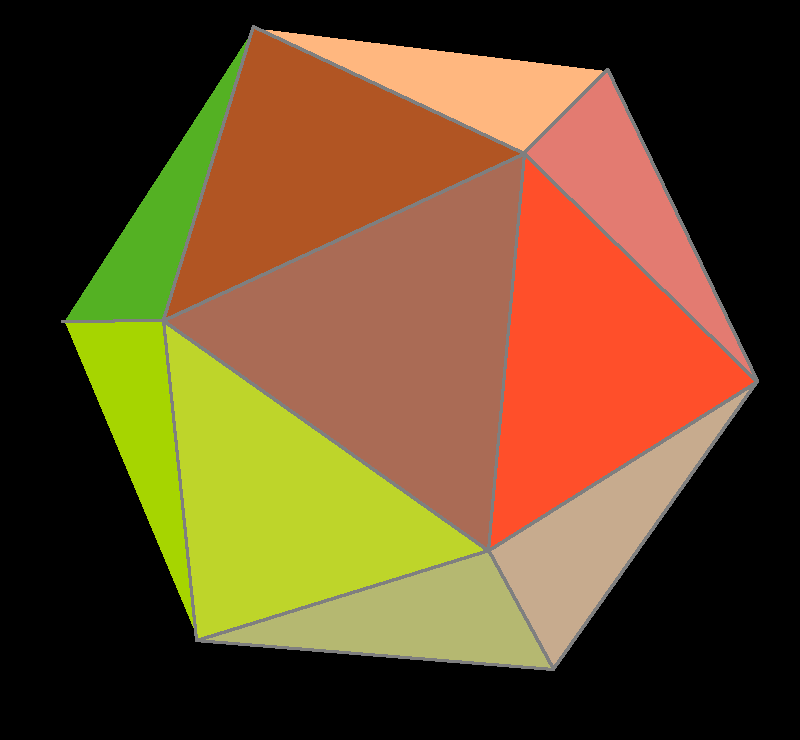
Icosahedron
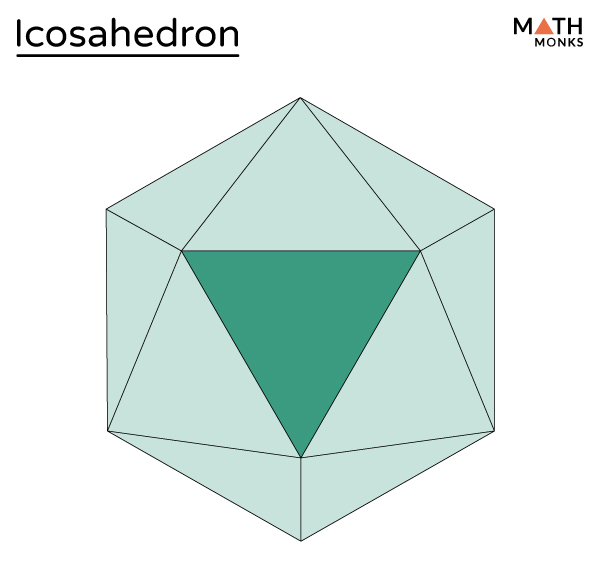
Platonic Solids Definition, Types, Examples, & Diagram
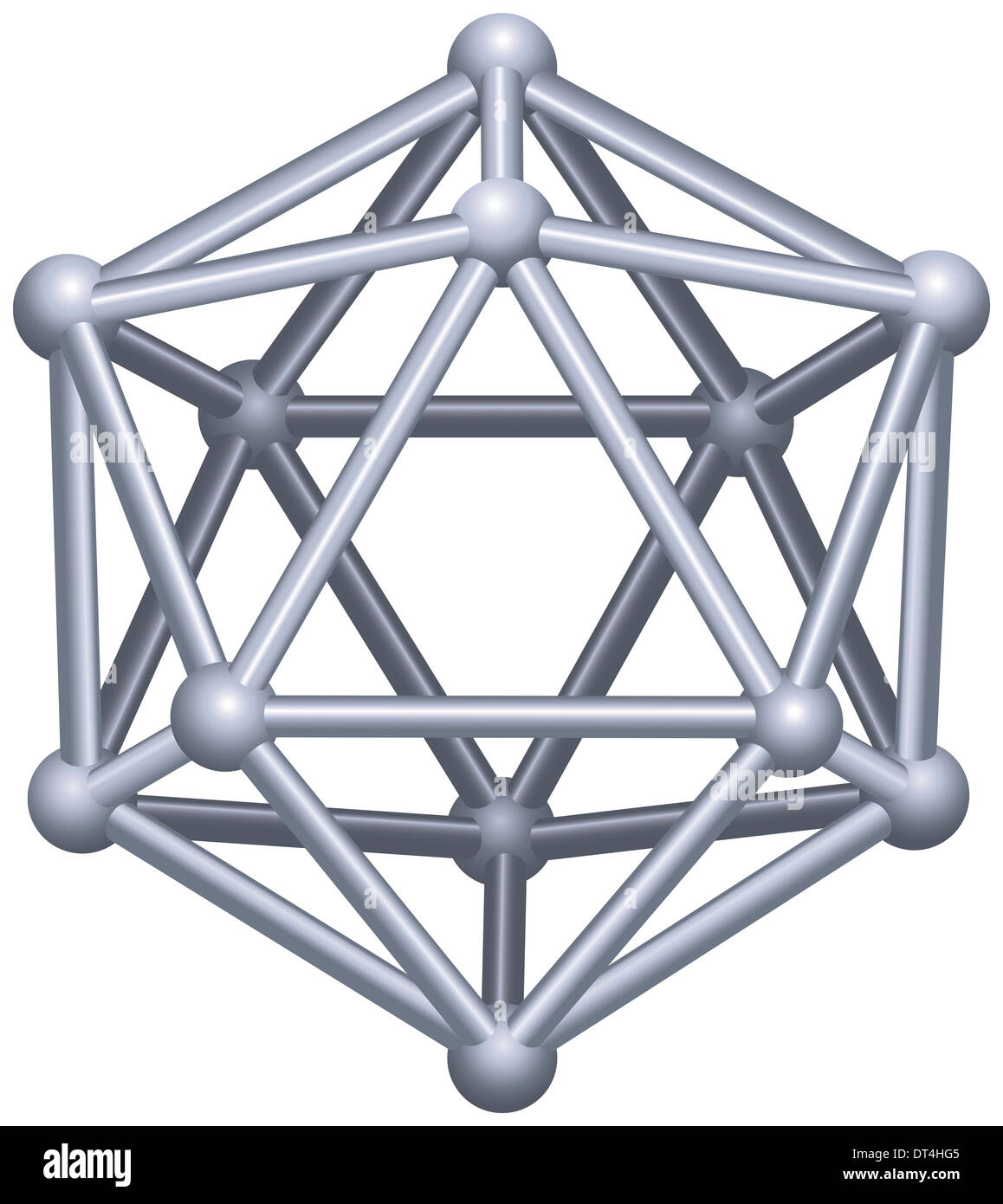
Icosahedron 3d

Icosahedron Definition, Faces & Vertices
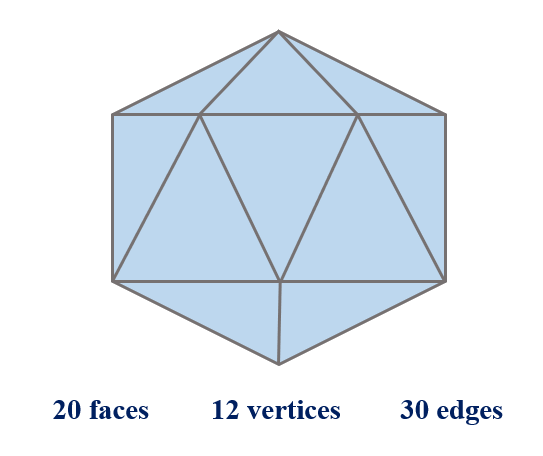
Icosahedron Definition, Examples, Parts, Properties & Nets
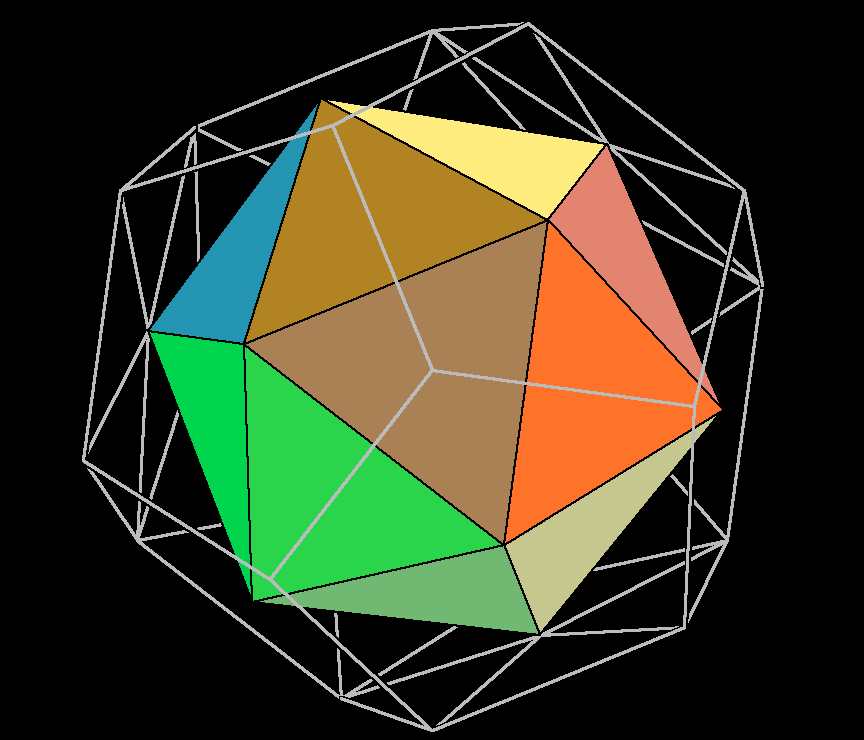
Icosahedron

Icosahedron Shape
It Is One Of The Few Platonic Solids.
The Icosahedron Is Famously Derived From The Golden Ratio (Φ), I.e., By Connecting The Vertices Of Three Golden Rectangles Arranged Orthogonally Around A Common Center.
The Icosahedron Is Built Around The Pentagon And The Golden Section.
Related Post: